
Best Web Hosting Providers in 2026: Honest Comparison & Why Hostinger Stands Out
Choosing web hosting in 2026 is no longer just about disk space or bandwidth. Hosting now directly affects SEO rankings, website speed, security, uptime, user experience, and even conversion rates.
With hundreds of hosting companies claiming to be “the best,” most users end up confused or locked into poor long-term choices.
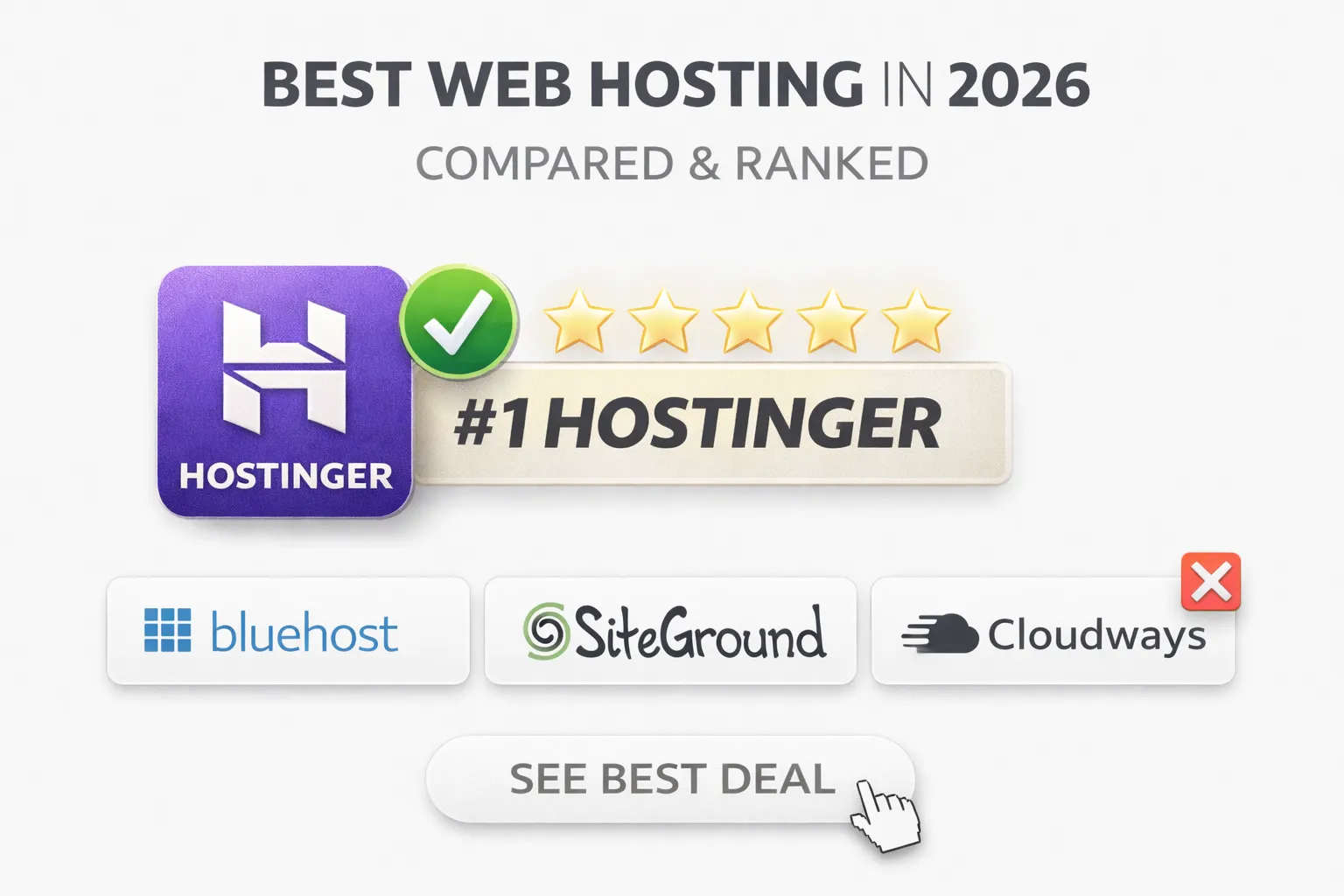
This guide breaks down the best hosting providers in 2026, compares them honestly, and explains why Hostinger is the best overall option for most users today.
Why Hosting Choice Matters More in 2026
Search engines, especially Google, now heavily prioritize:
- Core Web Vitals
- Server response time
- Uptime stability
- Security and HTTPS enforcement
- Geographic server proximity
Cheap, slow hosting directly hurts:
- SEO
- User retention
- Ad revenue
- E-commerce conversions
In short: bad hosting kills good websites.
Key Factors Used to Rank Hosting Providers
Before comparing providers, here’s what actually matters in 2026:
- Performance & Speed
- Uptime Reliability
- Pricing Transparency
- Scalability
- Security Features
- Ease of Use
- Support Quality
- Value for Money
Not brand hype. Real usage factors.
| Hosting Provider | Best For | Overall Rating |
|---|---|---|
| Hostinger | Best overall (price + performance) | ⭐⭐⭐⭐⭐ |
| Bluehost | Beginners | ⭐⭐⭐ |
| SiteGround | Managed WordPress | ⭐⭐⭐⭐ |
| Cloudways | Advanced users | ⭐⭐⭐⭐ |
| GoDaddy | Domain + basic hosting | ⭐⭐ |
🥇 Hostinger: Best Web Hosting Provider in 2026 (Overall Winner)
Hostinger has quietly become the most balanced hosting provider in the market.
It’s fast, affordable, beginner-friendly, and scalable — something most competitors fail to combine.
👉 Official Offer Link: Check Here
Why Hostinger Is Ranked #1
1. Performance That Actually Competes With Premium Hosts
Hostinger uses:
- LiteSpeed Web Servers
- NVMe SSD storage
- Built-in caching
- Global data centers
This directly improves:
- Page load speed
- Time to first byte (TTFB)
- Core Web Vitals
For SEO-focused sites, this matters more than fancy branding.
2. Pricing That Makes Sense (No Hidden Traps)
Most hosting companies advertise low prices and then:
- Upsell aggressively
- Increase renewal rates sharply
- Charge for basic features
Hostinger is transparent.
You get:
- Low entry price
- Free SSL
- Free email
- Free website migration
- Predictable renewals
This makes it ideal for:
- Agencies managing multiple sites
- Bloggers
- Startups
- Small businesses
3. Beginner-Friendly Without Being Limited
Hostinger’s control panel (hPanel):
- Clean
- Fast
- Simple
- Less confusing than cPanel
But it’s not “locked down” like Wix or Squarespace.
You still get:
- Full WordPress control
- File access
- Database management
- SSH (on higher plans)
4. Scales Well as Your Site Grows
Many hosts are good only at the start.
Hostinger allows easy upgrades to:
- Cloud hosting
- Higher RAM/CPU
- More traffic capacity
You don’t need to migrate immediately as your site grows.
Downsides of Hostinger (Being Honest)
No hosting provider is perfect.
Hostinger limitations:
- Phone support is limited
- Advanced enterprise setups may need custom servers
- No cPanel (some old-school users prefer it)
For most users, these are not deal breakers.
Bluehost: Overrated but Still Beginner-Friendly
Bluehost is popular mainly because of marketing and WordPress recommendations.
Pros:
- Easy onboarding
- Decent for absolute beginners
- Integrated domain registration
Cons:
- Slower performance compared to Hostinger
- Higher renewal costs
- Limited scalability
- Aggressive upselling
Good for first-time users, but many outgrow it quickly.
SiteGround: Premium Managed Hosting
SiteGround focuses on managed WordPress hosting.
Pros:
- Excellent support
- Strong security
- Good uptime
Cons:
- Expensive
- Limited storage
- Price increases quickly
Best for businesses that want hands-off management and don’t mind paying more.
Cloudways: Power for Advanced Users
Cloudways is not traditional hosting. It’s a cloud hosting manager.
Pros:
- Excellent performance
- Flexible cloud providers
- Good for developers
Cons:
- Complex for beginners
- No email hosting
- Higher learning curve
Great tool, but not beginner-friendly.
GoDaddy: Not Recommended for Serious Sites
GoDaddy is more of a domain company than a hosting leader.
Issues:
- Slower servers
- Paid add-ons for basics
- Weak performance
- Average support
Okay for domains. Poor choice for hosting in 2026.
| Feature | Hostinger | Bluehost | SiteGround | Cloudways |
|---|---|---|---|---|
| Speed | ⭐⭐⭐⭐⭐ | ⭐⭐⭐ | ⭐⭐⭐⭐ | ⭐⭐⭐⭐⭐ |
| Price | ⭐⭐⭐⭐⭐ | ⭐⭐⭐ | ⭐⭐ | ⭐⭐ |
| Ease of Use | ⭐⭐⭐⭐⭐ | ⭐⭐⭐⭐ | ⭐⭐⭐⭐ | ⭐⭐ |
| Scalability | ⭐⭐⭐⭐ | ⭐⭐⭐ | ⭐⭐⭐ | ⭐⭐⭐⭐⭐ |
| Value | ⭐⭐⭐⭐⭐ | ⭐⭐⭐ | ⭐⭐⭐ | ⭐⭐⭐ |
Who Should Choose Hostinger in 2026?
Hostinger is ideal if you:
- Care about SEO
- Want fast loading websites
- Are on a budget but don’t want cheap quality
- Plan to grow over time
- Want reliable hosting without complexity
👉 Best Deal Here: Click Here
Final Verdict: Best Hosting in 2026
There is no “perfect hosting” for everyone.
But if we judge based on:
- Performance
- Pricing
- Ease of use
- Scalability
- Overall value
Hostinger is the best all-round web hosting provider in 2026.
It’s not hype. It’s balance.