
Precision High-Voltage Protection: Electrogard Dielectric Insulation Coatings
In high-voltage electrical installations, switchgear rooms, substations, and transformer yards, dielectric safety is paramount. Conventional flooring and wall surfaces lack the electrical breakdown resistance required to protect personnel and sensitive electronic control panels from flashovers, earth-fault currents, and stray voltage leaks.
The Electrogard series by Floorkrete represents an advanced lineup of solvent-free, two-component resin-based dielectric coatings specifically formulated to deliver high electrical insulation resistance, seamless hygiene, and heavy-duty mechanical protection across industrial and utility environments.
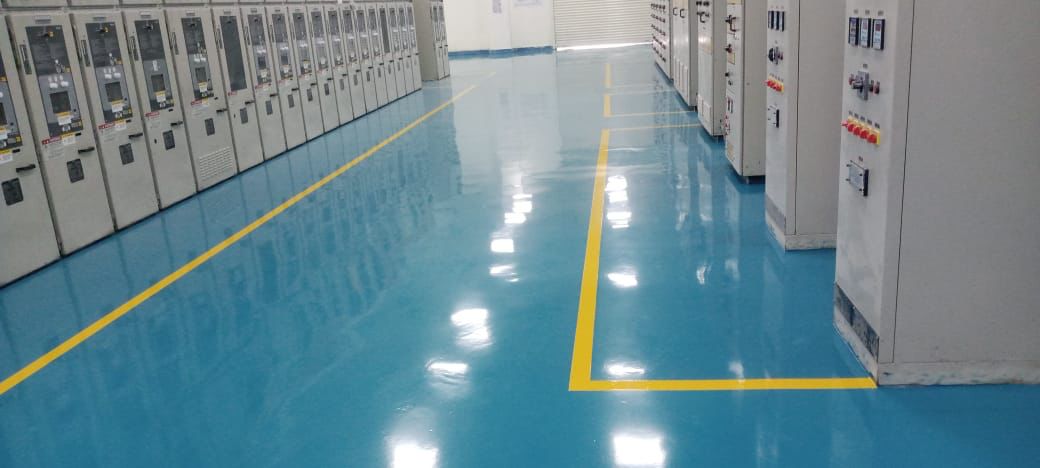
Core Engineering Advantages
- High Dielectric Strength & Leakage Elimination
Standard surface coatings can accumulate surface micro-cracks or retain moisture, creating dangerous pathways for current leakage. Electrogard coatings feature a porosity rating of less than 0.1%, forming a seamless, monolithic dielectric shield that prevents current flow and protects operators working near energized equipment.
- Moisture & Chemical Resistance
In transformer bays and battery charging rooms, dielectric floors are often exposed to aggressive chemical vapors, sulfuric acid splashes, and atmospheric condensation. Electrogard resists chemical attack and prevents moisture absorption from degrading its insulating capabilities.
- Substrate-Exceeding Adhesion
With bond strengths exceeding 1.5 MPa (exceeding the tensile strength of standard M30+ concrete), Electrogard fuses directly into the concrete matrix. This eliminates the risk of subsurface moisture migration and osmotic blistering that could lead to insulation breakdown at the substrate interface.
- High Mechanical & Heavy-Duty Load Capacity
Boasting a Shore D hardness of 85–88 and compressive strength exceeding 50 N/mm², Electrogard easily withstands heavy switchgear placement, rolling maintenance carts, and intense foot traffic without gouging, cracking, or loss of film thickness.
Installation & Quality Control Best Practices
Substrate Profiling: Concrete surfaces must be mechanically prepared via shot-blasting or diamond grinding to achieve an ICRI CSP-2 to CSP-4 profile. All surface contaminants, laitance, and oil must be removed.
Moisture Verification: Ensure concrete relative humidity and moisture vapor emission rates are within allowable limits prior to applying non-porous dielectric resins.
Thickness Control: Dielectric breakdown capacity is directly proportional to applied dry film thickness (DFT). Coatings must be laid uniformly using calibrated notched squeegees/trowels to ensure specified voltage ratings (ranging from 150 µm up to high-build self-levelling screed builds depending on project voltage ratings).