
Advanced Dielectric Protection in External Environments: ELECTROGARD Exposil
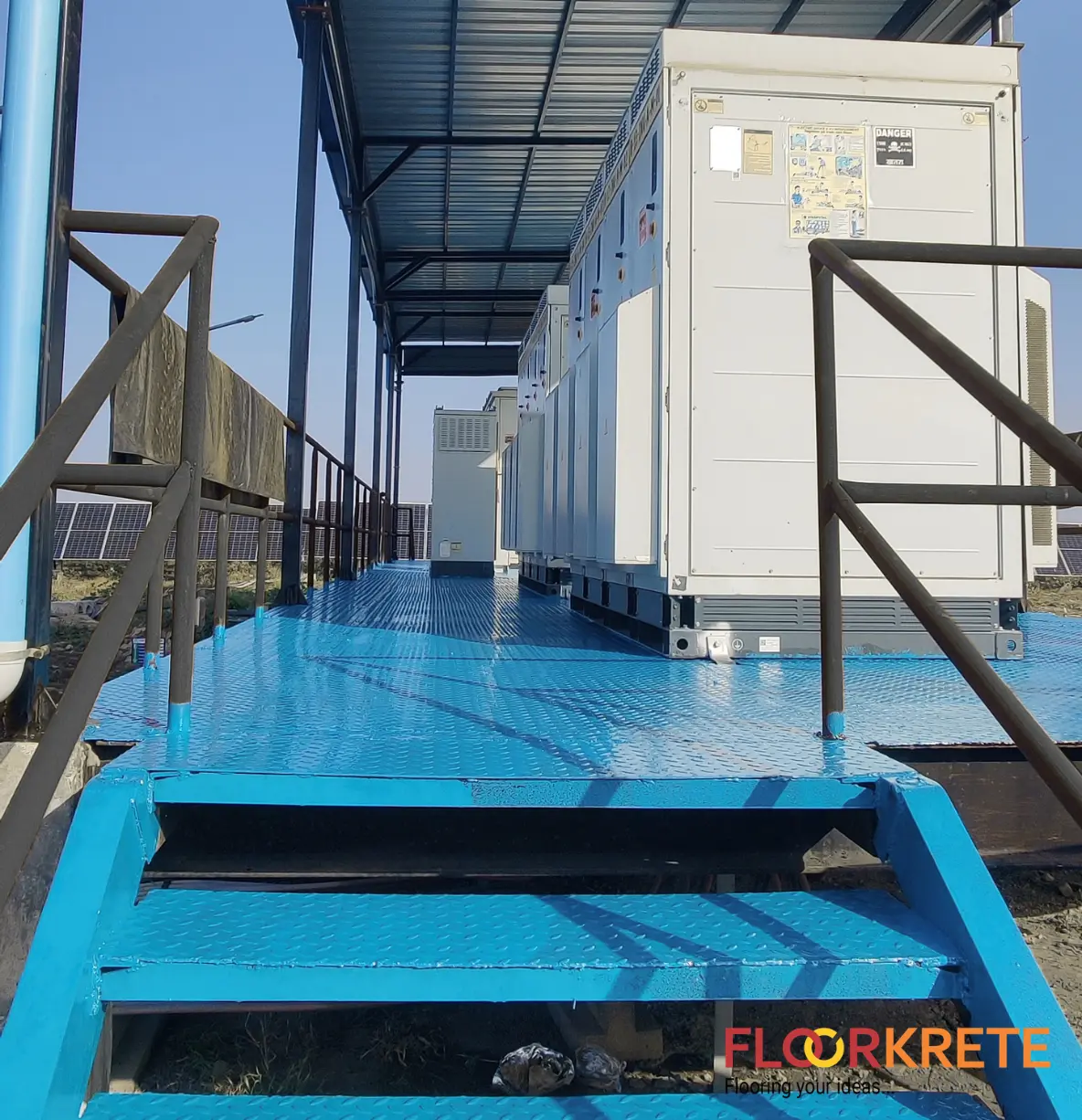
In high-voltage electrical installations, electrical insulation cannot be compromised—especially when exposed to ambient atmospheric conditions and direct ultraviolet (UV) radiation. While standard dielectric coatings often degrade, chalk, or micro-crack under continuous solar exposure, ELECTROGARD Exposil is specifically engineered as a high-performance, solvent-free, two-component dielectric floor and wall system tailored for exposed industrial and commercial environments.

By combining high breakdown voltage resistance with extreme mechanical durability, ELECTROGARD Exposil bridges the gap between electrical safety standards and harsh outdoor physical environments.

Technical Performance & Specification Matrix

ELECTROGARD Exposil delivers dense, low-porosity protection designed to maintain dielectric integrity under mechanical, thermal, and environmental stress.

Technical PropertyValue / SpecificationEngineering Significance
System Chemistry2-Component, Solvent-FreeLow VOC, zero solvent entrapment, seamless curing.
Recommended Thickness150 µm – 200 µmTailored according to target breakdown voltage requirements.
Coverage Rate0.28 kg/m² @ 150 µmHighly consistent coverage profile.
Porosity< 0.1%Eliminates dielectric leakage paths caused by moisture ingress.
Shore D Hardness85 – 88Exceptional resistance to gouging, heavy foot traffic, and equipment movement.
Compressive Strength> 50 N/mm²Capable of supporting heavy switchgear and machinery loads.
Flexural Strength> 48 N/mm²Resists cracking under structural deflection and dynamic loading.
Bond Strength> 1.5 MPa (Concrete failure)Exceeds concrete tensile strength and prevents subsurface delamination.
Pot Life30 minutesOptimal balance between working time and rapid set.
Touch Dry Time2 – 5 hoursMinimizes downtime during site commissioning.
Minimum Application Temperature25°CEnsures complete polymer cross-linking and optimal film performance.
Color OptionsBlue, Green, Signal Yellow, Dark RedFacilitates safety demarcation and phase identification zones.
Core Engineering Advantages for UV & External Exposure
  1. Superior Dielectric Strength & Moisture Barrier

Standard electrical insulation coatings can fail over time due to micro-porosity, which allows atmospheric humidity or chemical condensation to penetrate the matrix. With a porosity rating below 0.1%, ELECTROGARD Exposil creates an impermeable barrier that maintains high dielectric resistance even in outdoor high-humidity or rain-exposed switchyards.

  1. UV Stability for Exterior Surfaces

Formulated specifically for exposed applications, ELECTROGARD Exposil resists photolytic degradation caused by continuous solar radiation. It retains structural elasticity, surface integrity, and electrical insulation properties without premature chalking, blistering, or embrittlement.

  1. Substrate-Exceeding Bond Integrity

With an adhesion value exceeding 1.5 MPa, the bond line is stronger than the concrete substrate itself (resulting in concrete failure during pull-off testing). This eliminates the risk of moisture migration beneath the film, preventing osmotic blistering and insulation breakdown at interface points.

  1. Heavy-Duty Mechanical Endurance

High-voltage areas—such as sub-stations, transformer yards, control rooms, and battery rooms—frequently experience mechanical impact and heavy equipment placement. Boasting a Shore D hardness of 85–88 and a compressive strength exceeding 50 N/mm², ELECTROGARD Exposil functions as a true heavy-wear industrial surface that resists abrasion, impact, and chemical exposure.

Application & Detailing Recommendations
  • Surface Preparation: The underlying concrete substrate must be clean, structurally sound, free from laitance, oil, and standing water. A surface profile meeting ICRI CSP-2 to CSP-4 is recommended via light shot-blasting or diamond grinding.

  • Mixing & Working Time: Delivered as a pre-measured composite pack, Component A and Component B must be mixed thoroughly to ensure homogenous cross-linking. Pot life is 30 minutes at nominal application temperatures.

  • Environment: Ensure ambient and substrate temperatures are at or above 25°C during application to achieve proper cure kinetics and mechanical strength.

  • Seamless Hygienic Finish: Apply in a single or multi-coat build depending on target voltage breakdown thresholds, terminating into keyways at floor-wall junctions or coves for a seamless, easy-to-clean hygienic enclosure.

Similar Posts

Leave a Reply

Your email address will not be published. Required fields are marked *